Vitamin Deficiency Quiz

Answer a few questions about your diet and lifestyle to estimate which vitamins and minerals you may be low in. Takes about 2 minutes.

A lifestyle-based estimate, not a medical diagnosis or a blood test — use it to spot likely gaps, then confirm with a healthcare professional.

Start the quiz
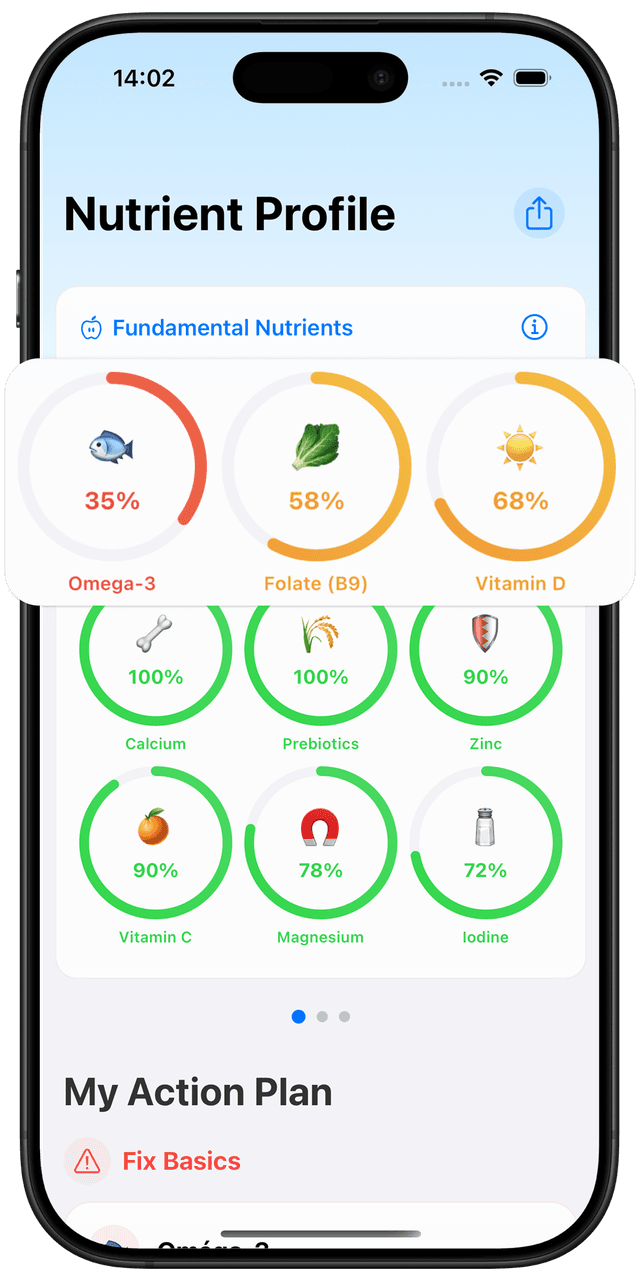
Supplements AI nutrient check-up result screen showing per-nutrient scores

About you

Select your 3 most important goals

Your goals let us suggest "bonus" nutrients that go beyond fixing pure deficiencies.

Select the option that best describes you

Difficulty getting up is linked to low magnesium and sub-optimal vitamin D, both involved in sleep depth and circadian reset.

Select the level that matches your experience

High stress burns magnesium and B6; cortisol also raises urinary zinc loss.

Your age helps us recommend appropriate supplements

1830 years80

Vitamin D synthesis, calcium needs and B12 absorption all shift with age.

Biological factors affect nutrient needs

Menstruation and pregnancy significantly affect micronutrient needs.

Your diet

Think salmon, sardines, mackerel…

00 × / week7

EPA-DHA (omega-3) and iodine come mainly from oily fish; under 2 servings keeps deficiency risk high.

Burgers, chicken breast, turkey…

03 × / week10

Animal protein supplies complete amino acids, zinc and natural creatine; low intake signals possible gaps.

Whole eggs – any cooking style

02 × / week14

Egg yolk packs bio-available B12, choline, riboflavin and high-quality protein.

Spinach, kale, rocket, etc.

07 × / week21

Leafy greens concentrate folate, vitamin C and prebiotic fibre vital for DNA repair and gut flora.

Almonds, walnuts, cashews, etc.

00 × / week14

Nuts top the charts for magnesium, vitamin E and plant zinc — key cofactors for stress recovery and immunity.

Milk, yogurt, cheese, etc.

07 × / week21

Milk and yogurt deliver highly bio-available calcium and B2; aged cheeses add vitamin K2.

Choose one main style

Whole-grain or sourdough lowers phytates, boosting magnesium, zinc and gut-friendly fibre vs white bread.

Select your typical daily caffeine consumption

High caffeine intake raises urinary magnesium loss and can lower iron absorption.

Select your typical weekly alcohol consumption

Regular alcohol use depletes B-complex vitamins, especially thiamine (B1) and folate.

Most sea salts are not iodised

Iodised table salt remains the simplest protection against iodine deficiency.

1 serving ≈ 1 medium apple / 1 cup berries

07 servings21

Citrus, kiwi and berries are top vitamin-C sources.

00 tbsp / day4

Plant omega-3 (ALA) partly converts to EPA and DHA.

01 servings14

Legumes add complete protein when combined with grains.

02 servings14

Potatoes are a leading B6 source in many diets.

07 servings21

Oats, brown rice and whole-wheat are rich in B1 (thiamine).

Low-carb diets reduce cereal intake, lowering thiamine status.

Liver is an exceptional source of riboflavin (B2).

Sun & skin

Office, factory, retail…

Indoor workers miss the UVB exposure required to synthesise vitamin D.

Arms and face uncovered, around 11am–3pm

Under 15 min of midday sun rarely yields enough UVB to make 1000 IU of vitamin D.

Select the closest match to your natural skin color

Darker skin (IV-V) needs up to 3× more UVB to make the same vitamin D as pale skin.

We'll compute your BMI automatically

Higher BMI sequesters vitamin D in fat tissue and raises long-term calcium needs.

Activity

Select your typical weekly training volume

Building or maintaining muscle increases demand for amino acids, creatine and calcium.

Intervals, high intensity (≥ 20 min work)

Regular HIIT benefits from beta-alanine to buffer lactic acid and delay fatigue.

Sauna or long cardio with dripping sweat

High perspiration accelerates zinc and sodium losses; replenishment supports recovery.

Digestion

A course of ≥ 3 days in the last 6 months

Antibiotics disrupt gut flora; targeted probiotics can help restore balance.

Gas or abdominal swelling multiple times a week

Bloating suggests dysbiosis or fibre imbalance; microbiome support may relieve it.

Select the option that fits best

Infrequent stools can flag low fibre or magnesium; both aid healthy transit.

A few more

Any tobacco (vaping excluded)

Cigarette smoke oxidises vitamin C roughly twice as fast; smokers have higher daily needs.

How we estimate your risk

This quiz is a screening tool, not a diagnostic test. Each nutrient starts at a full score and loses points for habits that are linked to lower intake or higher needs — for example, eating oily fish less than once a week lowers your omega-3 score, while little midday sun lowers vitamin D. The thresholds reflect dietary reference intakes and public-health data from sources such as the NIH Office of Dietary Supplements.

The result reflects likelihood, not confirmation. Several nutrients — notably iron and vitamin B12 — can only be confirmed with a blood test. Always talk to a doctor or registered dietitian before starting or stopping a supplement, especially if you are pregnant, breastfeeding, or managing a health condition.

Reviewed by Adrien Grusse, Founder & CEO, Supplements AI.

Frequently asked questions

Is this vitamin deficiency quiz a medical diagnosis?

No. It estimates your risk of low vitamin and mineral levels based on your diet and lifestyle. It does not measure your blood and is not a substitute for professional medical advice or a blood test.

How does the quiz estimate my risk?

Each answer adjusts a 0–100 score for the nutrients it affects — for example, eating oily fish less than once a week raises your omega-3 risk. The scoring runs entirely in your browser and uses thresholds based on dietary reference intakes and public-health data.

Which deficiencies need a blood test to confirm?

Iron and vitamin B12 status can only be confirmed with a blood test. The quiz flags when you may be at risk, but you should ask a healthcare professional for proper testing before supplementing those.

Do you store my answers?

No. Your answers stay on your device and the result is computed locally. Nothing you enter is sent to a server.

References